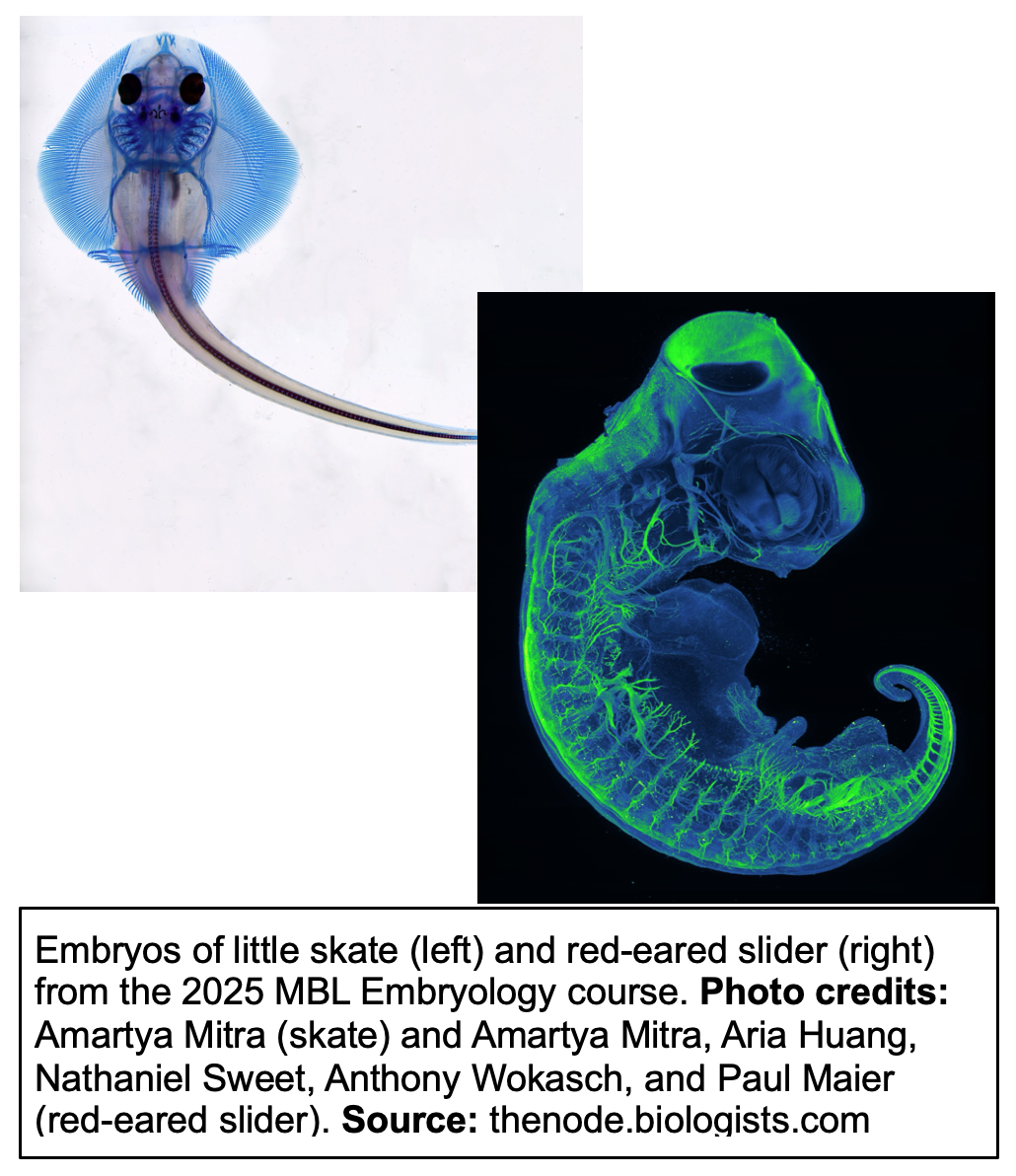
BIO 4563/6563: Evolutionary and Developmental Biology (Evo-Devo)
One of the most remarkable processes in nature is the
development of an adult organism from a single cell: the
fertilized egg. Within a generation, the egg will give rise to
millions or billions of differentiated cells that are organized
into tissues, body parts, and complex organs. Across
generations, changes to these developmental processes have
generated the stunning diversity of life found on Earth. The
course takes a comparative approach to analyze the interplay
between morphogenesis and natural selection and better
understand how genetic and developmental mechanisms enable or
limit evolutionary change.
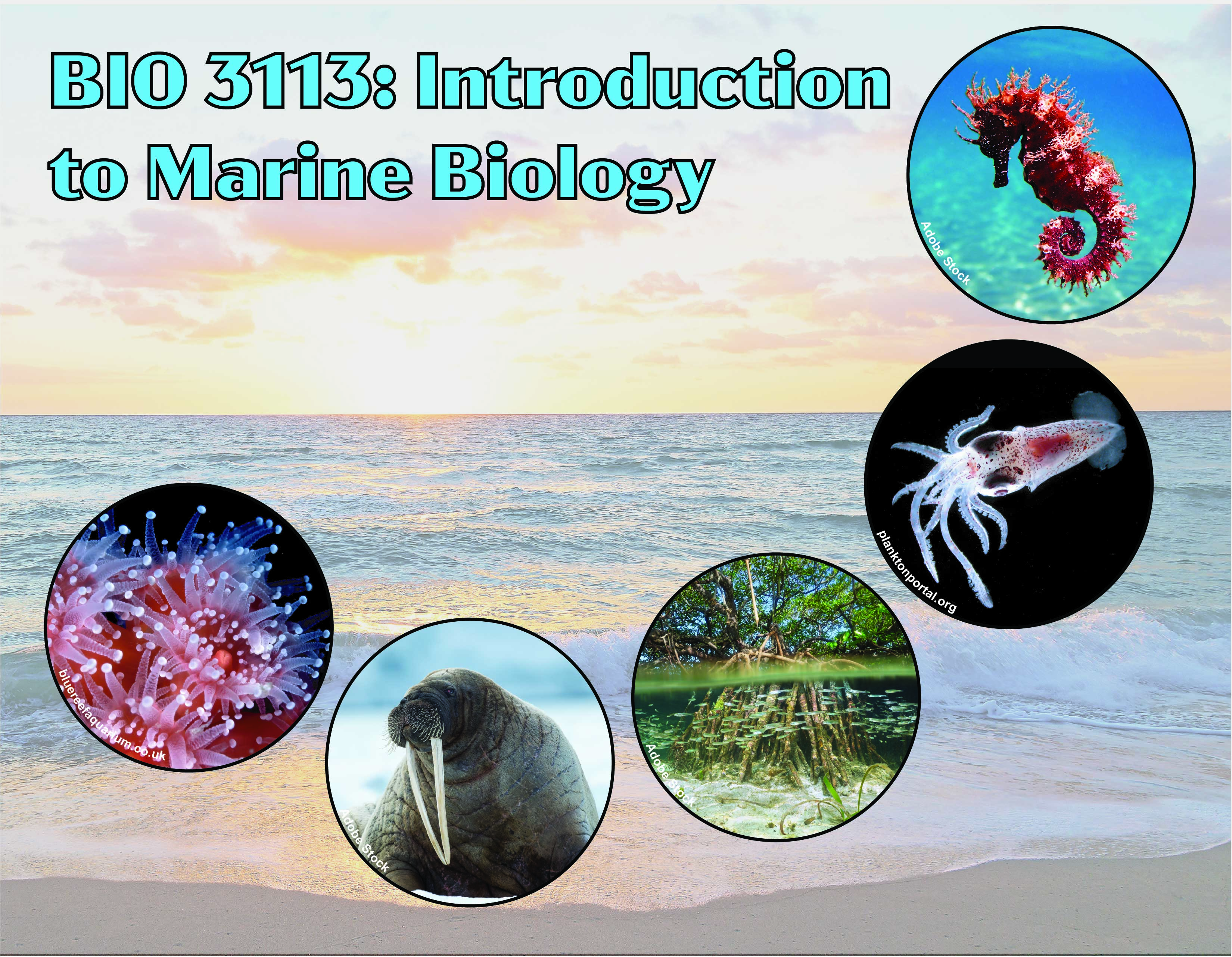
BIO 3113: Introduction to Marine Biology
Marine biology is the study of life in the oceans and other saltwater
environments, from microscopic plankton to the largest whales on Earth.
This course provides a foundational introduction to marine life, emphasizing
the diversity, physiology, ecology, and evolutionary relationships of marine
organisms across major ocean habitats. Students will explore marine systems
ranging from coastal estuaries and coral reefs to the pelagic zone and deep
sea, with attention to how physical and chemical conditions influence
biological patterns and processes. Topics include physical and chemical
oceanography, marine biogeography and biodiversity, evolution and ecology,
and interactions between humans and the sea.